Best AEO Tools 2026: 10 Platforms Compared by Price and Use Case
An AEO (answer engine optimization) tool tracks whether AI assistants like ChatGPT, Perplexity, Gemini and Google's AI Overviews mention your brand, how they describe you, which sources they cite, and how often you show up compared with competitors. Some tools also help you fix the content and site issues behind weak visibility. There is no single best AEO tool. The right pick depends on your size, your budget, the engines your buyers use, and whether you want software your team runs or a service that runs it for you.
Below is what to look for, a comparison of tools that exist today with pricing taken from each vendor's own site, and short picks by situation. I run AImpact Nexus, and we sell one of the options on this list. I've put it after the third-party tools and described it as plainly as the rest.
Quick answer: the best AEO tool by need
| If you need… | Start with | Why (as published by the vendor, October 2026) |
|---|---|---|
| Competitor benchmarking and share of voice | Peec AI, Ahrefs Brand Radar | Peec AI tracks daily competitor share of voice (Starter $95/mo); Brand Radar shows share of voice and cited pages (custom prompts from $50/mo) |
| Prompts where rivals win and you don't | Semrush AI Visibility Toolkit | Competitor gap reports show prompts where competitors are cited and you aren't ($99/mo) |
| Ecommerce and retail brands | Peec AI, Profound | Both list AI shopping and product tracking |
| Tracking Google AI Overviews and AI Mode | Profound, Ahrefs Brand Radar, Otterly.ai | All three list AI Overviews among tracked engines |
| A small budget | Otterly.ai, HubSpot AI Search Grader | Otterly Lite is $29/mo, the lowest published paid plan here; HubSpot's grader is free |
| Enterprise scale, SSO and APIs | Profound, Conductor | Large prompt sets, many regions and data APIs; pricing on request |
| Someone to do the work for you | AImpact Nexus ARIA Studio | A managed option: we run the tracking and the fixes |
The full comparison, with links to each vendor's pricing page, is below.
What does an AEO tool actually do?
Most AEO tools work the same way underneath. You give the tool a list of prompts, the questions your buyers type into AI assistants ("best accounting firm in Fort Wayne," "Shopify alternatives for small stores," "which CRM integrates with QuickBooks"). The tool runs those prompts on a schedule across several AI engines, records the answers, and reports:
- Mentions: was your brand named in the answer?
- Position: were you named first, third, or buried at the end?
- Citations: which web pages did the AI link to as sources, and were any of them yours?
- Share of voice: across all tracked prompts, what share of mentions went to you versus named competitors?
- Sentiment: did the AI describe you positively, neutrally, or with caveats?
Better tools add site audits for AI crawlers, content recommendations, and traffic attribution so you can see visits that came from AI assistants. A few add content creation on top.
What should you look for in an AEO tool?
Use this checklist when you compare vendors. Most of the differences that matter are on it.
- Engines covered. Check for ChatGPT, Perplexity, Gemini, Google AI Overviews, Google AI Mode, Claude and Microsoft Copilot. Many entry plans cover only two or three, with the rest as add-ons or enterprise-only.
- Prompt tracking limits. How many prompts can you track, and how often are they re-run (daily or weekly)? A small business can learn a lot from 25 to 50 well-chosen prompts. A brand with many product lines needs hundreds.
- Citation and source tracking. You want to see which URLs the AI cites. That tells you where to get mentioned (review sites, directories, industry publications) and which of your own pages are working.
- Competitor share of voice. Raw mention counts mean little without a comparison set. Make sure you can name your competitors and track them on the same prompts.
- Sentiment. Being mentioned with a warning attached is different from being recommended. Look for sentiment or recommendation-strength scoring.
- Export and API. If you report in Looker Studio, Power BI or a spreadsheet, confirm CSV export and API access before you buy. On several tools, API access starts at a mid-tier or enterprise plan.
- Reporting cadence. Daily tracking is common. Check whether the reports you care about update daily or weekly, and whether you can share dashboards with clients or leadership.
- Price model. Pricing is usually by prompt count, engine count, credits, or seats. Compare on what you will actually track, not on the headline monthly price.
Which AEO tools are worth comparing?
These are tools I verified on their own websites in October 2026. Prices are as published by the vendor at that time; vendors change plans often, so check the linked page before you buy. Where a vendor doesn't publish a price, I say so.
| Tool | Best for | Engines (as listed by vendor) | Standout feature | Pricing as published |
|---|---|---|---|---|
| Profound | Enterprise brands | ChatGPT, Perplexity, Google AI Mode, Gemini, Copilot, DeepSeek, Claude, AI Overviews, Exa (Enterprise) | Broad engine coverage, CSV/JSON export and API on Enterprise | Free 7-day trial; Enterprise pricing on request |
| Semrush AI Visibility Toolkit | Teams already on Semrush | ChatGPT, Gemini, Google AI Mode named in docs | AI Visibility Score plus competitor gap reports | $99/mo |
| Ahrefs Brand Radar | Teams already on Ahrefs | ChatGPT, AI Overviews, AI Mode, Gemini, Perplexity, Copilot, Claude | Share of voice and cited pages across a large prompt index | Custom prompts from $50/mo; AI Visibility Index $199/mo |
| Otterly.ai | Startups and small teams | ChatGPT, AI Overviews, Perplexity, Copilot (AI Mode, Gemini, Claude as add-ons) | Low entry price with citation tracking and API on Standard | Lite $29/mo, Standard $189/mo, Premium $489/mo |
| Peec AI | SEO teams that want daily competitor data | ChatGPT, AI Mode, AI Overviews, Copilot, Gemini, Naver AI (more on Enterprise) | Daily visibility, position, sentiment and share of voice; Data Studio connector | Starter $95/mo, Pro $245/mo, Advanced $495/mo |
| Scrunch | Brands preparing for AI agents | ChatGPT, Claude, Gemini, Perplexity, AI Mode, AI Overviews, Meta | Agent Experience Platform (AI-friendly site version) | Starter $300/mo, Growth $500/mo month-to-month |
| Conductor | Enterprise SEO and content teams | ChatGPT, Perplexity, AI Overviews and others | Recommendation-strength tiers, Data API and MCP for BI | Pricing on request (usage-based) |
| Writesonic | Teams that want tracking plus content creation | ChatGPT, Gemini, AI Overviews (more on Enterprise) | Prompt tracking bundled with article generation | From $79/mo billed annually |
| HubSpot AI Search Grader | A free first look | OpenAI, Perplexity, Gemini | One-time score covering sentiment and share of voice | Free |
Profound
Profound is built for large brands. Its Enterprise plan lists the widest engine coverage of anything here: ChatGPT, Perplexity, Google AI Mode, Gemini, Microsoft Copilot, DeepSeek, Claude, Google AI Overviews and Exa Search. Enterprise also includes CSV and JSON exports, API access, shopping tracking and SSO. The pricing page shows a free 7-day trial (ChatGPT, Gemini and AI Overviews, 50 prompts) and otherwise lists Enterprise as custom. If you're a small business, Profound is likely more than you need.
Semrush AI Visibility Toolkit
If your team already lives in Semrush, the AI Visibility Toolkit is the low-friction option. Semrush lists it at $99 per month. It includes an AI Visibility Score benchmarked against competitors, competitor research that shows where rivals get cited and you don't, prompt research, a Brand Performance report covering share of voice and sentiment, prompt tracking, and an AI search site audit. The base subscription includes 25 tracked prompts and 10 daily CSV exports. Semrush's documentation names ChatGPT, Gemini and Google AI Mode; check with them if you need Perplexity or Claude coverage. Brand Performance updates weekly; the other reports update daily.
Ahrefs Brand Radar
Ahrefs Brand Radar tracks mentions, citations and share of voice across ChatGPT, Google AI Overviews and AI Mode, Gemini, Perplexity, Copilot and Claude. It covers competitor benchmarking, sentiment, custom prompts tracked daily, and exports from the dashboard. Ahrefs lists custom prompts from $50 per month and its AI Visibility Index at $199 per month, with some Brand Radar access included on paid Ahrefs plans. Like Semrush, it makes the most sense if you already pay for Ahrefs.
Otterly.ai
Otterly.ai has the lowest published entry price on this list. Lite is $29 per month for 15 prompts with daily tracking, brand visibility, sentiment and citation source tracking. Standard ($189 per month) moves to 100 prompts and adds API access. Premium is $489 per month for 400 prompts. Base plans cover ChatGPT, Google AI Overviews, Perplexity and Copilot; Google AI Mode, Gemini and Claude are paid add-ons. Otterly's homepage also describes competitive benchmarking and a "Share of AI Voice" metric.
Peec AI
Peec AI describes its core output as visibility, position, sentiment and share of voice, tracked daily against competitors. Plans run Starter $95, Pro $245 and Advanced $495 per month, with 50 to 350 daily prompts depending on tier. API access starts at Pro and a Data Studio (Looker Studio) connector at Advanced, which matters if you build BI dashboards. Peec also lists AI shopping product tracking. All plans cover ChatGPT, AI Mode, AI Overviews, Copilot, Gemini and Naver AI; Claude and Perplexity are listed under Enterprise.
Scrunch
Scrunch monitors ChatGPT, Claude, Gemini, Perplexity, Google AI Mode, AI Overviews and Meta. Its differentiator is the Agent Experience Platform, which generates an AI-friendly version of your site for AI agents. Plans include citation tracking, page audits, agent traffic monitoring and 350 or 700 prompts. Starter is $250 per month billed annually ($300 month-to-month) and Growth is $417 annually ($500 month-to-month). An Enterprise Data API is listed on the Enterprise plan.
Conductor
Conductor's AI Search Performance is part of a larger enterprise SEO and content platform. It scores how strongly AI recommends you on a five-tier scale (championed, shortlisted, neutral, mixed, discouraged), benchmarks you against competitors, ties sentiment to cited sources, and connects visibility to traffic and conversions. Conductor offers a Data API for BI tools and MCP support for feeding data to your own AI agents. Pricing is usage-based on credits and not published.
Writesonic
Writesonic combines AI visibility tracking with content creation. Starter is $79 per month billed annually (50 prompts, 15 articles a month), Basic is $199 and Growth is $399. Paid plans below Enterprise track ChatGPT, Gemini and Google AI Overviews; Enterprise covers nine platforms including Perplexity, Claude and Grok. All plans include a free trial.
HubSpot AI Search Grader
HubSpot's AI Search Grader is a free, one-time check of what OpenAI's model, Perplexity and Gemini say about your brand. It returns a score out of 100 across sentiment, presence quality, brand recognition, share of voice and market competition. It doesn't track over time, but it's a reasonable first look before you pay for anything.
AImpact Nexus ARIA Studio (managed option)
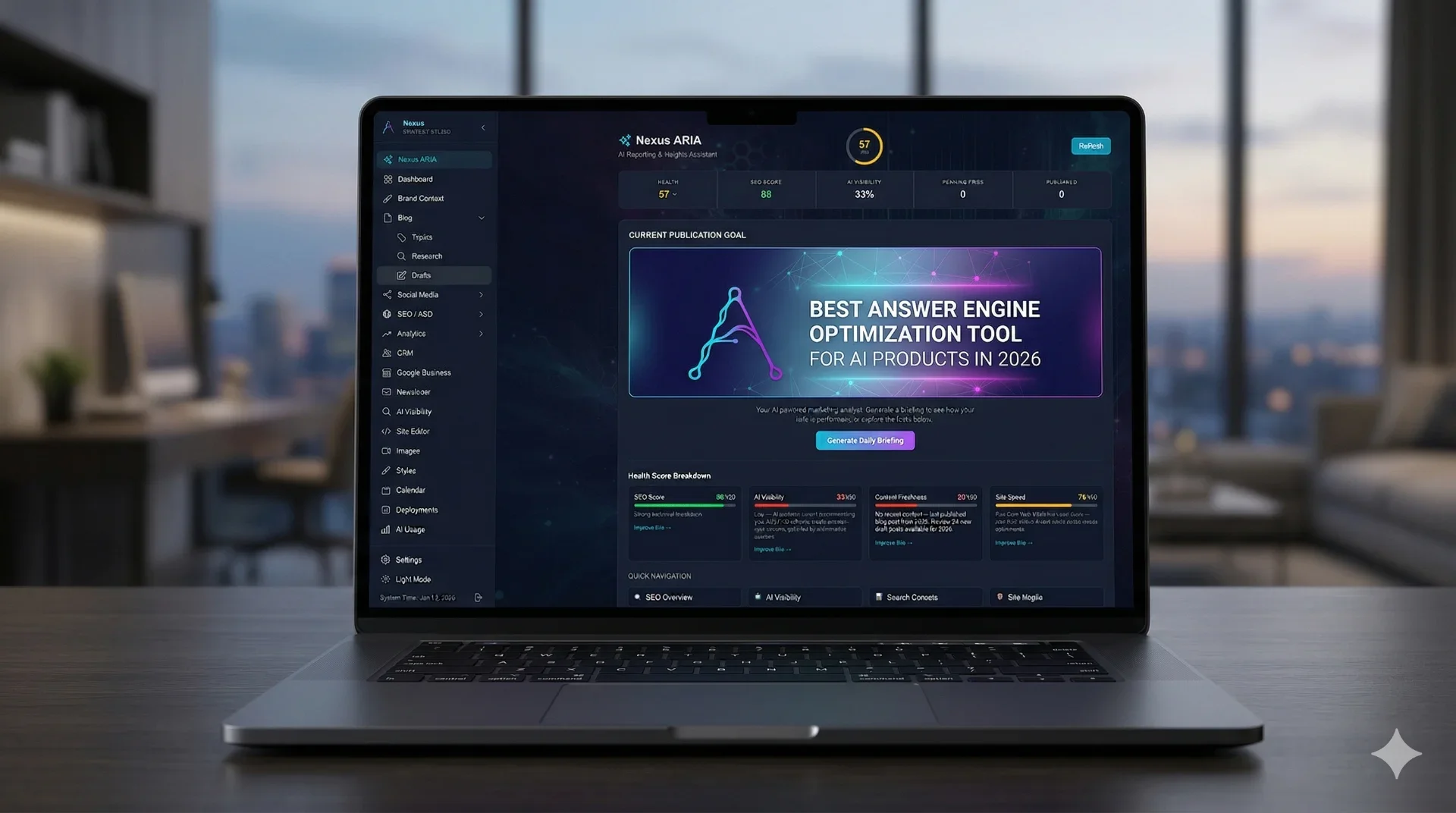
Every tool above is software: it shows you the data and your team does the work. ARIA Studio is our managed alternative for small businesses that don't want another dashboard. We are a managed AI provider, so we run it for you. ARIA is our AI marketing agent, and Studio covers your site, content, SEO and AI visibility in one place. The goal is to get you found on Google and cited by ChatGPT, Perplexity and Gemini, and we handle both the tracking and the content and site fixes.
It's an add-on at $799 per month on top of AImpact OS, which is $599 per month if you bring your own AI or $699 per month if we provide the AI. That costs more than the entry tiers of self-serve tools. It suits an owner who wants the work done, not a marketing team that wants its own data platform. If you want a raw API feed for a BI stack or tracking across a dozen engines, a dedicated tool above is a better fit. Full pricing is on our pricing page.
Which AEO tool fits you?
Enterprise brand. Profound and Conductor are built for large prompt sets, many regions, SSO and data APIs. Profound lists the broadest engine coverage on its Enterprise plan. Conductor fits if you want AI visibility inside a wider SEO and content platform. Expect to talk to sales for pricing.
SEO team already on Semrush or Ahrefs. Start with the add-on for the platform you already pay for. Semrush's toolkit is $99 per month; Ahrefs Brand Radar starts at $50 per month for custom prompts. You keep one login and your existing keyword data.
Startup on a budget. Otterly.ai Lite at $29 per month is the cheapest published paid plan here. Run HubSpot's free grader first to see where you stand. Peec AI Starter at $95 per month is the step up if you want daily competitor share of voice.
Software companies. Software buyers often ask AI assistants to compare products, so competitor share of voice is the metric to watch. Peec AI and Otterly both track it, and Semrush's competitor research shows prompts where rivals are cited and you aren't.
Ecommerce and retail brands. Look for product and shopping tracking. Peec AI lists AI shopping product tracking on its plans, and Profound lists shopping on Enterprise.
Agencies. You need many projects, shareable reports and exports. Otterly includes unlimited brand reports, team members and workspaces from Standard up. Peec AI's Advanced plan is aimed at teams managing multiple projects and adds the Data Studio connector. Profound mentions an Agency Growth plan priced by credits per client workspace.
You need an API or data export for BI dashboards. Confirm the tier. Otterly includes API access from Standard, Peec AI from Pro (plus Data Studio at Advanced), Profound and Scrunch on Enterprise, and Conductor through its Data API. Semrush includes CSV exports on the base plan.
Owner who wants it done for them. If you'd rather not learn a new tool, a managed service like our ARIA Studio runs the tracking and the fixes for you. Shop around: ask any provider what they track, how often they report, and what they will change on your site.
How do you get value from an AEO tool once you have one?
A tool only measures. The work that moves visibility is the same regardless of vendor:
- Pick prompts your buyers really ask. Use sales calls, support tickets and search queries, not just your brand name.
- Read the citations. If the AI keeps citing a directory, review site or industry article, getting listed or quoted there often matters more than another blog post.
- Fix your own pages. Clear answers near the top of the page, question-style headings, accurate schema, and consistent business details across the web make it easier for AI to describe you correctly. Our AEO guide covers this in more depth.
- Watch the trend, not the day. AI answers vary from run to run. Judge progress over weeks across your full prompt set.
FAQ
Do I need an AEO tool?
Not on day one. If you're a small business, you can learn a lot by asking ChatGPT, Perplexity and Gemini the five or ten questions your customers ask and writing down who gets named. A tool earns its cost when you want to track more prompts than you can check by hand, compare yourself to competitors over time, or report results to someone else.
Can I check AI visibility for free?
Yes. Run manual prompt checks in each assistant, ideally in a logged-out or private window so your history doesn't shape the answer. HubSpot's AI Search Grader gives a free one-time score. Our free AI visibility audit checks your site for the signals AI relies on, such as FAQ schema, Organization schema, an llms.txt file and direct-answer content. Profound offers a 7-day free trial and Writesonic offers a free trial on its plans.
Do AEO tools have APIs or data exports?
Many do, often on higher tiers. Based on vendor pricing pages: Otterly includes API access from Standard, Peec AI from Pro with a Data Studio connector at Advanced, Semrush includes daily CSV exports, Ahrefs allows dashboard exports, Profound offers CSV, JSON and API on Enterprise, Scrunch lists an Enterprise Data API, and Conductor offers a Data API and MCP integration.
Which AI engines should an AEO tool track?
At minimum, ChatGPT and Google's AI Overviews and AI Mode, since those are where many buyers start. Add Perplexity, Gemini, Claude and Copilot based on who your customers are. Check whether an engine is included in the plan or sold as an add-on; several vendors charge extra for Claude or Gemini.
How often should AEO results be reported?
Daily tracking is standard among the tools above, but most businesses only need to review results weekly or monthly. AI answers shift from run to run, so a weekly or monthly trend is a better signal than any single day. Semrush, for example, updates its Brand Performance report weekly and its prompt tracking daily.
Are AEO tools different from SEO tools?
They measure different things. SEO tools track rankings and clicks on search results pages. AEO tools track whether AI-generated answers name and cite you. The underlying work overlaps a lot, which is why Semrush and Ahrefs now sell AI visibility as part of their platforms.
Andy Oberlin
Founder, AImpact Nexus
Want this on a box you own?
AImpact OS is $599/mo with your own AI, or $699/mo if we provide the AI: private employee data, Company Brain with ACLs, one REINS. ARIA Studio is $799/mo on top.
Get Your Free Audit